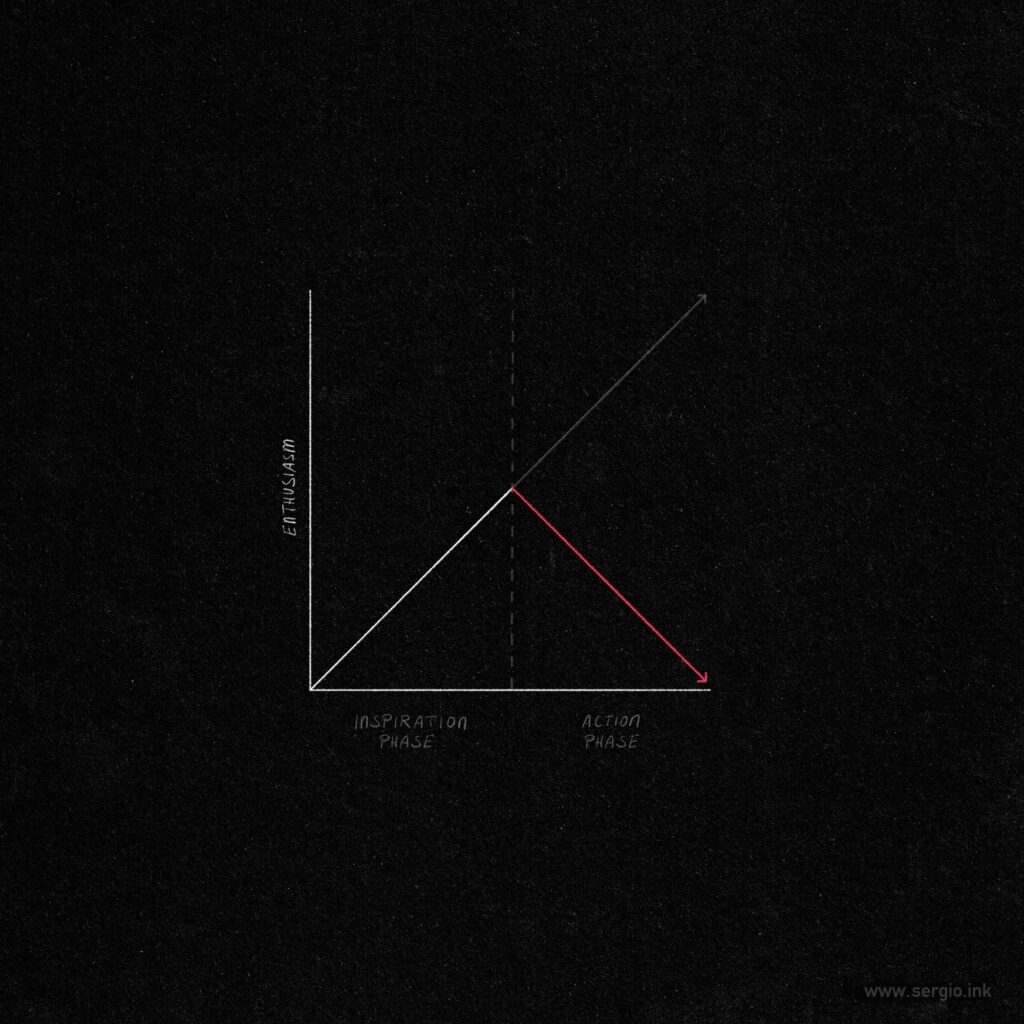
Enthusiasm Crash

Do you know that feeling of excitement when a new idea strikes?

Maybe you stumbled upon an inspiring post, came up with the perfect plot for a novel, or finally found your dream business idea.

It’s something that immediately feels right—and you just can’t wait to dive in.

Except… you don’t.

You carry it around for days.

Weeks.

Sometimes years.

And suddenly, the idea that once filled you with energy starts to haunt you.

Even worse—it begins to dictate your inner peace, your confidence, your life.

Guilt creeps in. Bitterness follows…

I’ve been there. Dozens of times.

And it taught me one thing:

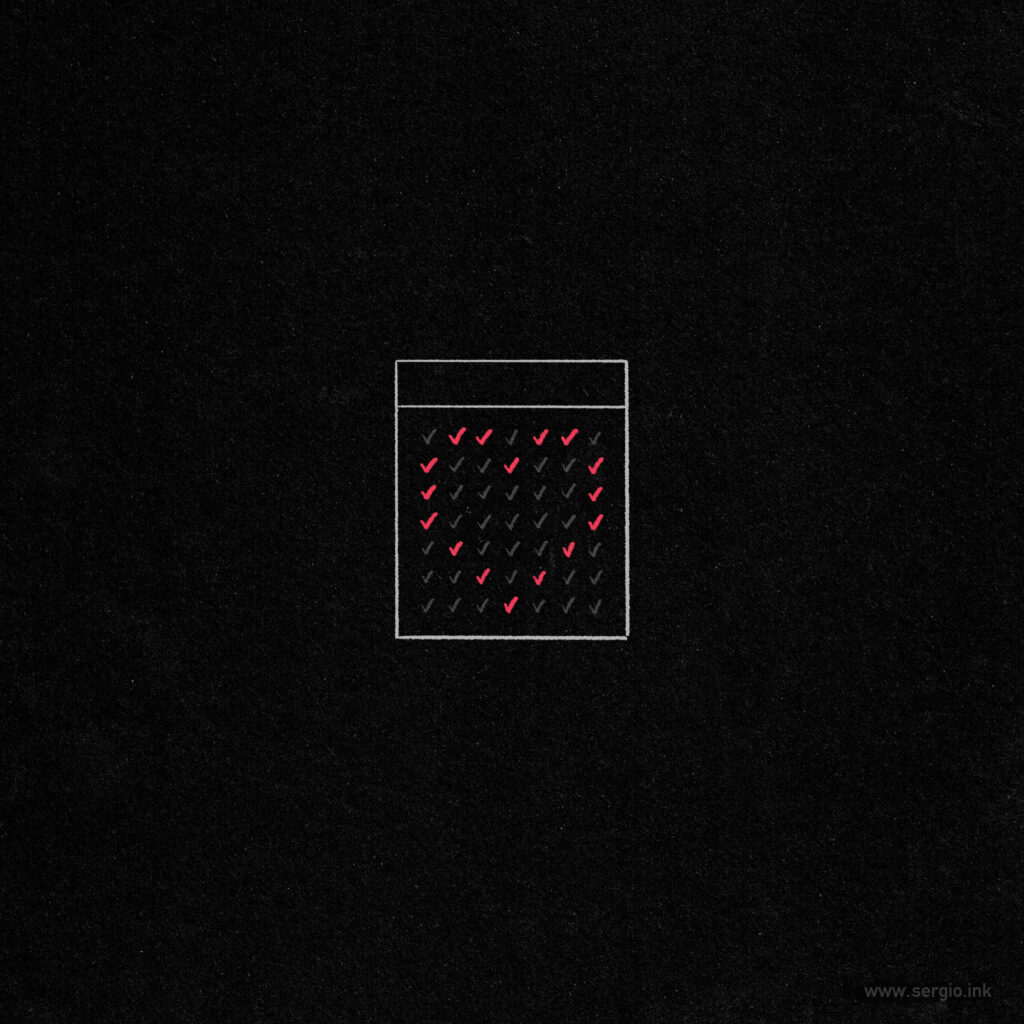
Without Action, Enthusiasm Always Fades

The good news is: we can easily avoid that downfall.

All we have to do is bring the idea out of our heads.

So here’s a challenge:

Take two minutes.
Throw that idea on paper, and see if it swims or if it drowns.

Maybe the initial spark revives—maybe not.

If it does, consider coming back to it tomorrow.

If not? Good. Let it go and clear space for the one that will.

Either way, these two minutes aren’t wasted.

In fact, they might just be the best investment of your life.

Dare it.

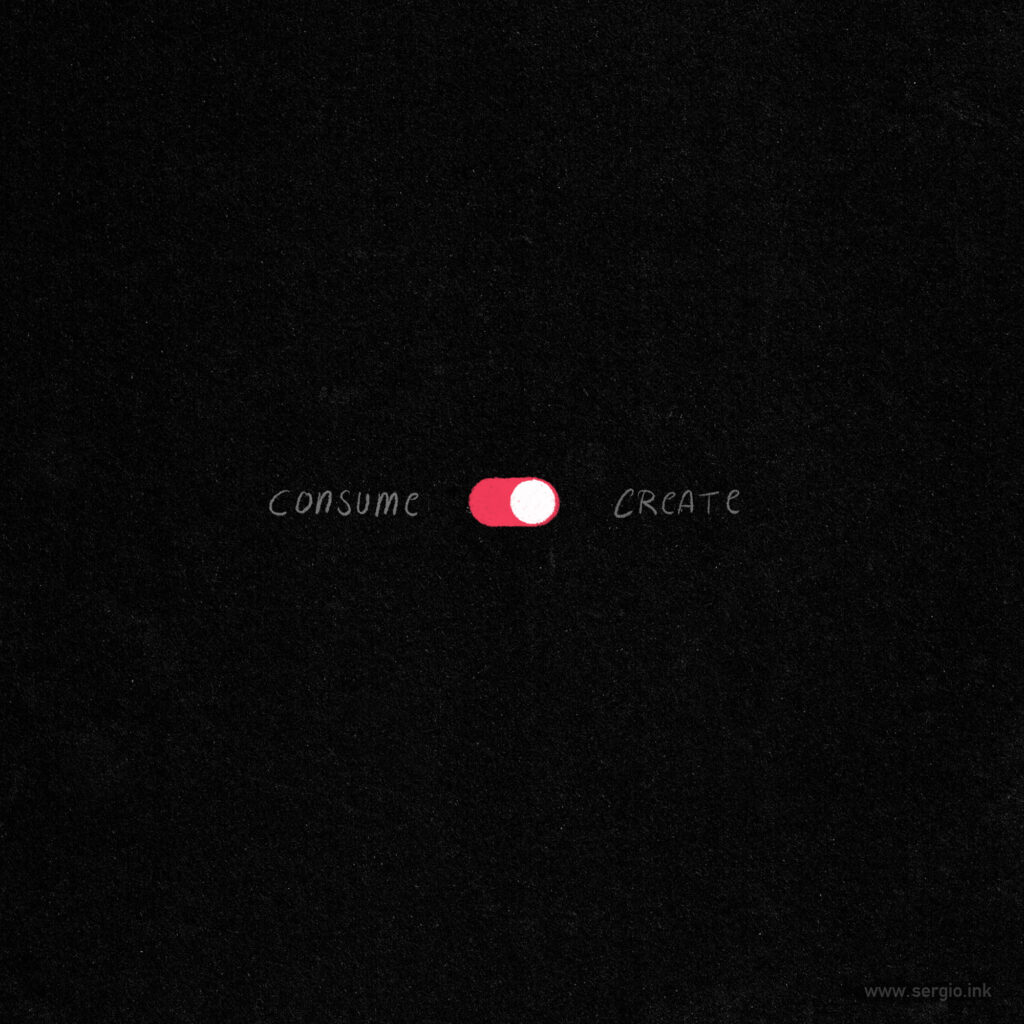
Screen off.

Mind on.

Now.

Thanks for your valuable Attention.

See you tomorrow.
Sergio

Hey, you still here?

No worries.

Maybe this approach can give you the last push.

Imagine this:

What if you didn’t find the idea?

What if the idea found you?

What if that flash of enthusiasm is the universe‘s way of nudging you?

Perhaps it’s trying to tell that the time for that idea has come.

The only question is:

Are you the one who will bring it to life?

You might be okay with disappointing yourself.

But do you really want to disappoint the universe?
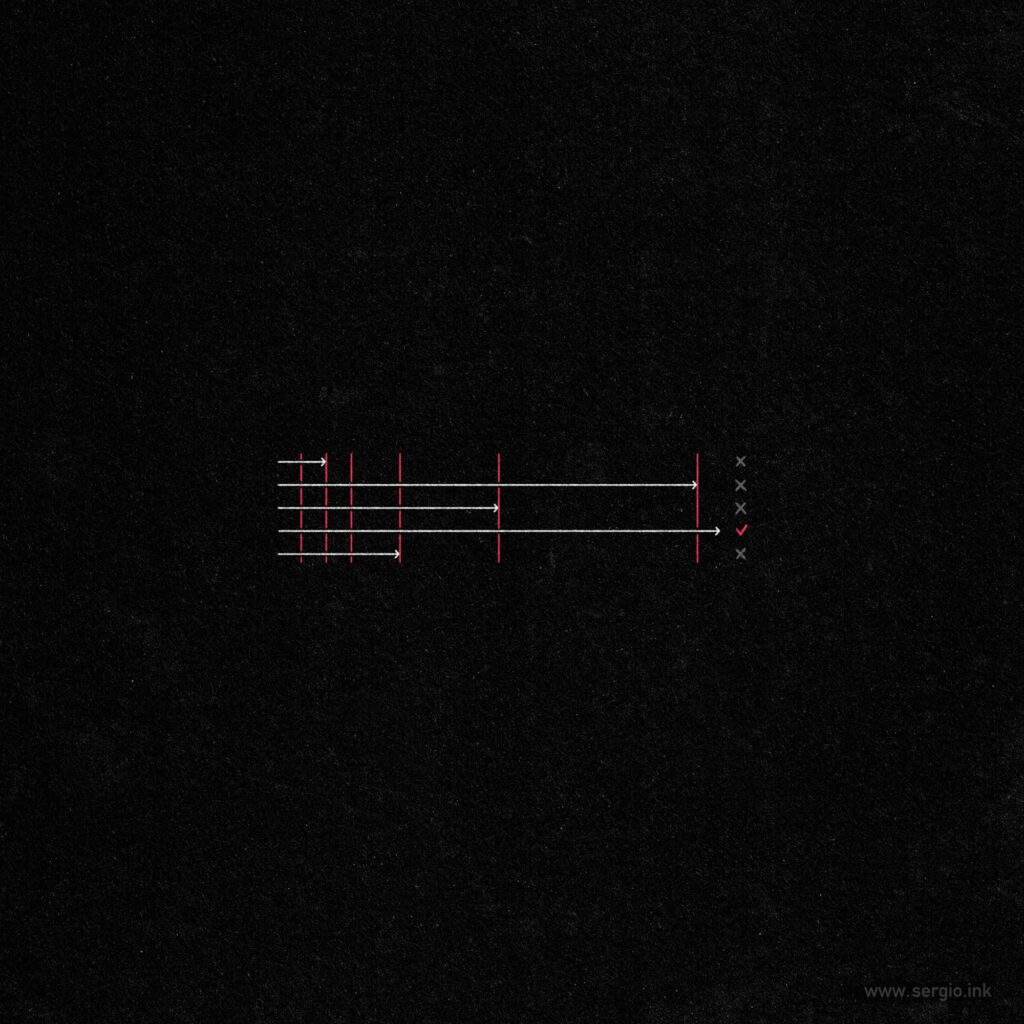
Creativity Demands Determination

Determination:
[de-
 = “completely” + terminare = “to limit, end” (from terminus = “boundary, limit”)]

“bringing something to an end”


Ideas end where determination stops.

Creativity isn’t about our ideas, the outcome, or any tangible result.

It’s about who we become along the way.

The joy of the creative act comes with a bill of commitment and initiative.

It asks us
to show up—even when inspiration fades and doubt creeps in.
To experiment in the unfamiliar.
To face our fears of failure.
To break through comfort zones and expectations.
To question our views and even our values.
To keep going—especially when distraction is tempting.

And push through resistance.

The result is like a trophy—just proof of our participation.

The real reward is meeting our most creative and courageous selves.

And the more we persist, the more we stand out.

Commit or Squish Like Grape

Mr. Miyagi:
“Are you ready?

Daniel:
“Yeah, I guess so.”

Mr. Miyagi:
“I guess I must talk.

Walk on road.

Walk right side—safe.

Walk left side—safe.

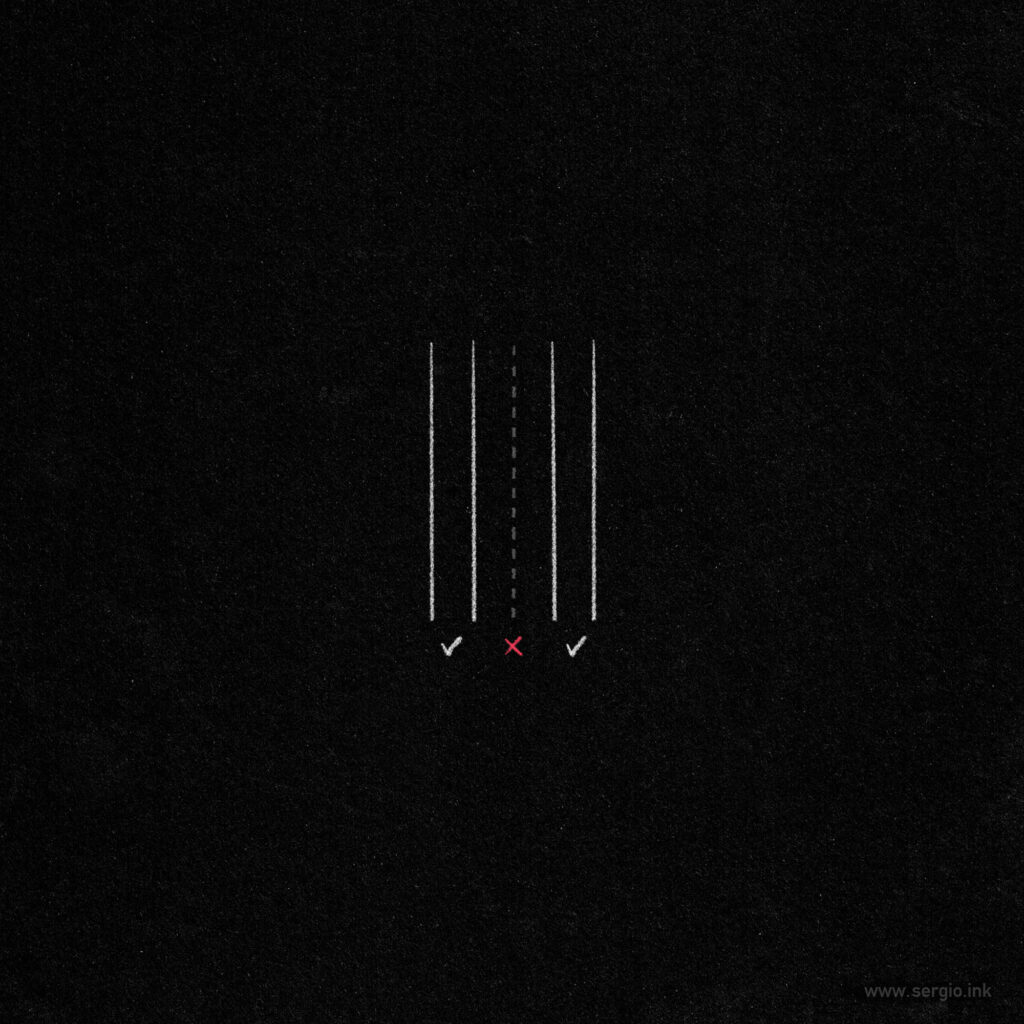
Walk middle—sooner or later, get squish just like grape.

Karate, same thing.

Either you karate do ‘yes,’ or karate do ‘no.’

You karate do ‘guess so’—squish like grape.

30 years later

It took me three decades to truly understand this valuable message from one of my favorite childhood movies, Karate Kid (1984).

In this scene, Mr. Miyagi appeals to Daniel’s self-awareness by demanding a decision.

Not a lighthearted decision.

Not one made out of youthful naivety.

He demands a conscious and honest one.

The question is:
Do or don’t.

Both decisions are valid.

He is not saying “don’t ever quit.”

He is saying, “Whatever your decision is—do it like you mean it.”

He warns that hesitation, indecision, or half-hearted effort is where danger lives.

The “middle of the road” is where unfinished projects, excuses, blaming, and shattered dreams lie.

Mr. Miyagi talks about 100% commitment—the kind that will inevitably lead to clarity and growth.

I can see why it took me so long to understand. It takes maturity.

And the appreciation of time that young people simply cannot have.

In their perception, time seems to be infinite.

Adults become conscious of their values and limitations.

That’s when we realize:

Every “yes” means saying “no” to something else—and vice versa.

The sooner we understand this trade, the sooner we learn to prioritize and dedicate our attention to what truly matters to us.

A Personal Story 

At some point, I knew what I wanted to do—become a freelance illustrator. That was my dream, and I decided to turn it into my goal.

I was determined to achieve it.

Yet starting your own business comes with fears and doubts.

While working on my illustration portfolio, those insecurities led me to invest time in a plan B—just in case I didn’t succeed.

Plan B was to fall back on the things I used to do in the past—the kind that worked but didn’t fulfill me.

It slowed everything down.

The moment I stepped fully to one side of the road and declined all not-goal-related requests, everything changed—because now I no longer had to trade my time, focus, and determination.

I feel that I made that 100%, non-negotiable commitment Mr. Miyagi talks about.

And after a few months, I started receiving the kind of commissions I had dreamed of.

Starting any life-changing endeavor with commitment is a constant, decision-demanding adventure.

And that‘s the secret to daily excitement and fulfillment.

The Power of Action

There is only one way to create:
take action.

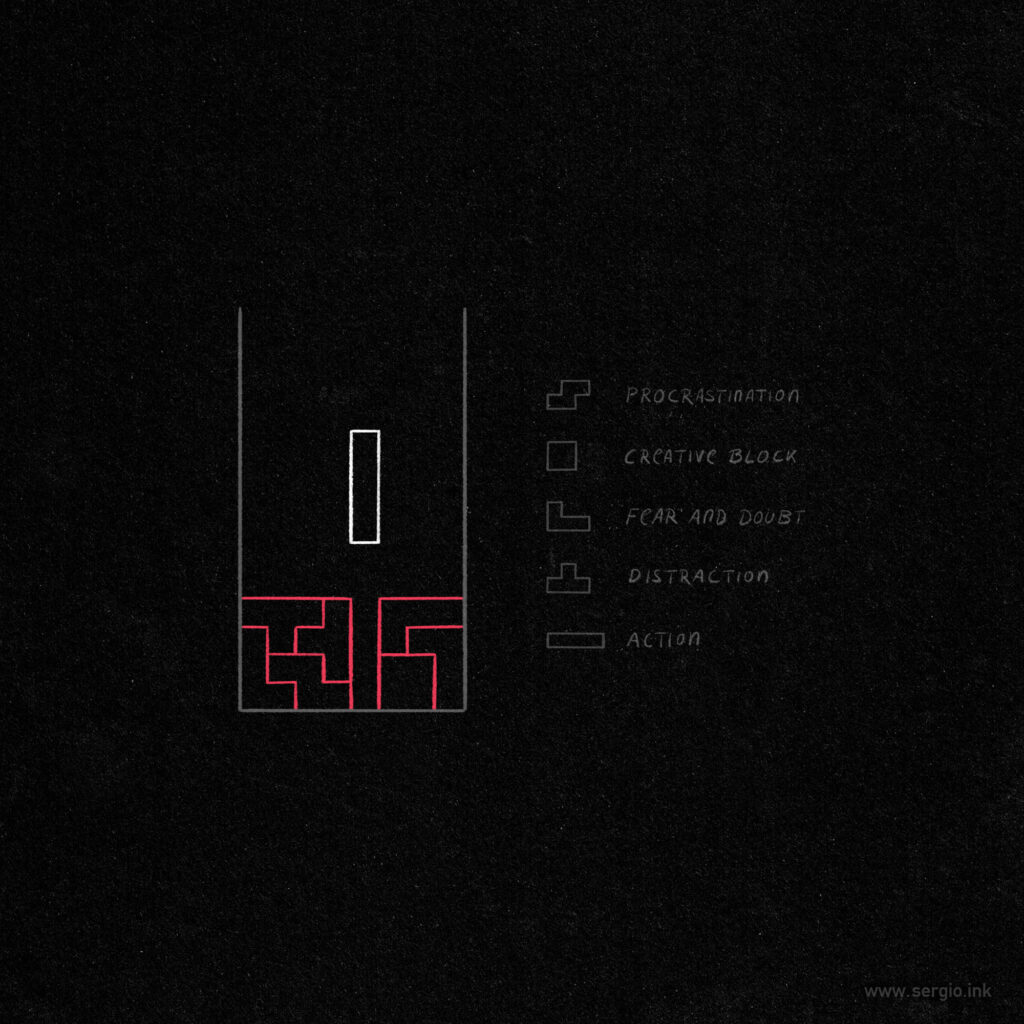
The journey of a creative mind is paved with obstacles and enemies that try to stop us from drawing the first line of a painting, writing the first sentence of a novel, or sketching out an innovative product we have in mind.

So many great ideas never saw the light of day because of these enemies. And they have names: procrastination, imposter syndrome, creative block—all part of a bigger monstrosity called resistance.

“Resistance is like the Alien or the Terminator or the shark in Jaws. It cannot be reasoned with.”
—Steven Pressfield
(The War of Art)

After living a creative life for more than two decades, I have one bad news and three good news.

The Bad News

These wicked creatures do exist, and most of them will never vanish completely.

The Good News

  1. They are nothing but holograms of our doubts and fears. They are mainly are the fear of not meeting expectations—whether our own or others.
  2. We can reinterpret them by using them as a signpost or compass. Whenever resistance strikes, it’s a sign that we are on to something important to us and worth fighting for.
  3. They serve as a natural selection between those who start and those who don’t. If you can beat them, your chances of creating impact are high.

Don’t just accept their presence—embrace it. Use it. They are part of the creative adventure and seeds of growth. Train yourself to face them in eager anticipation.

Trying to dodge them would be like playing Super Mario or Zelda in a world without enemies—no fun at all.

And again, there is one single solution to beat them all: take action.

You’ll see that most of these enemies crumble the moment the pen tip hits the canvas.

And the best part is: the effort can be incredibly small.

Whenever I receive a new commission for an illustration project, I feel their presence. Procrastination will immediately try to convince me that cleaning the dishes is suddenly the most important thing.

Bottom Line

Creative enemies will never go away—but you decide how to treat them.

Don’t allow them to breathe.

Next time you feel stuck, just do something—no matter how small. Create a folder structure on your computer. Draw the first sketch in seconds. Jot down your immediate thoughts.

The moment you make, you are already in the middle of the process.