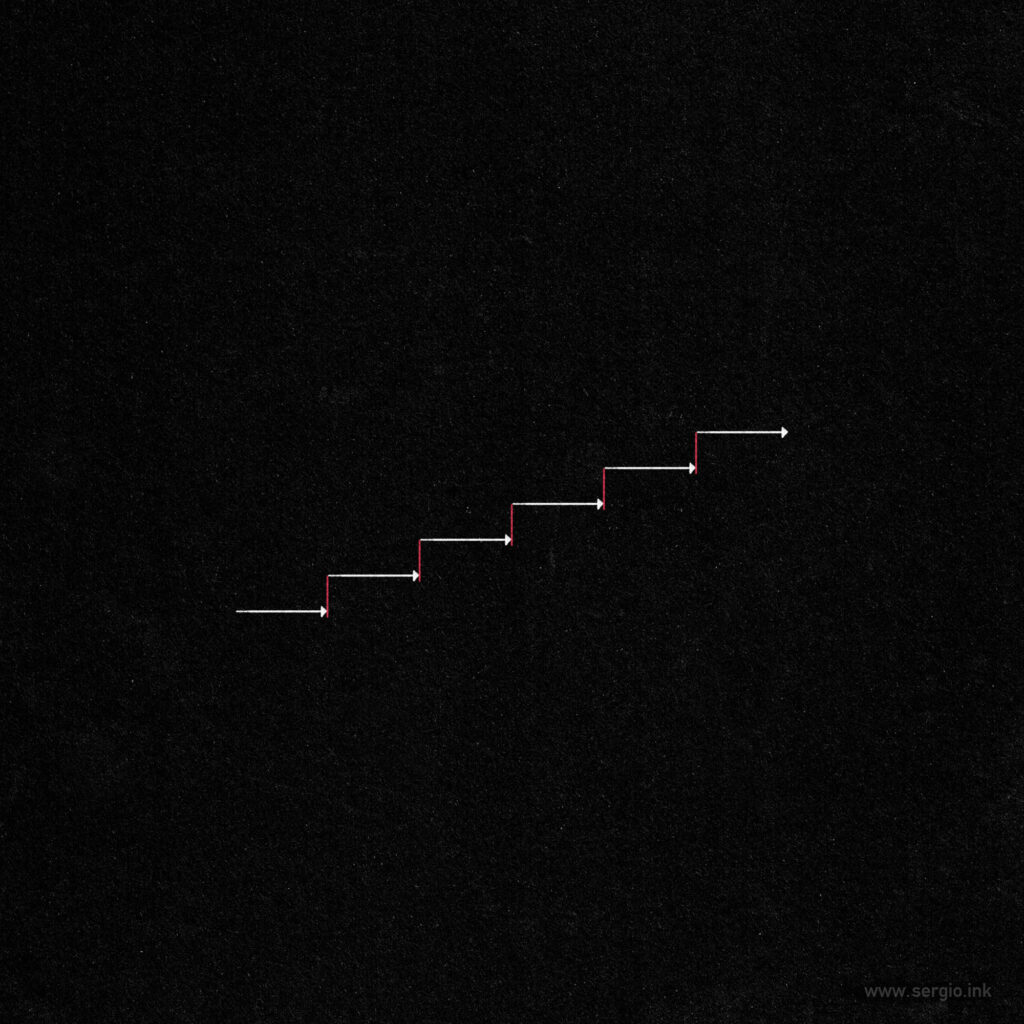
The reason to finish is to start something new.”
—Rick Rubin
a space to think together—on creativity, attention, and work that matters.
The reason to finish is to start something new.”
—Rick Rubin
Whoever said play equals fun?
Children are the ultimate role models when it comes to creativity and how to engage with the world.
How they inspect blocks from every angle,
build towers without expectations,
make them crumble with joy.
And we can learn from how they deal with challenges and obstacles.
If a two-year-old tries to assemble train tracks, frustration is inevitable.
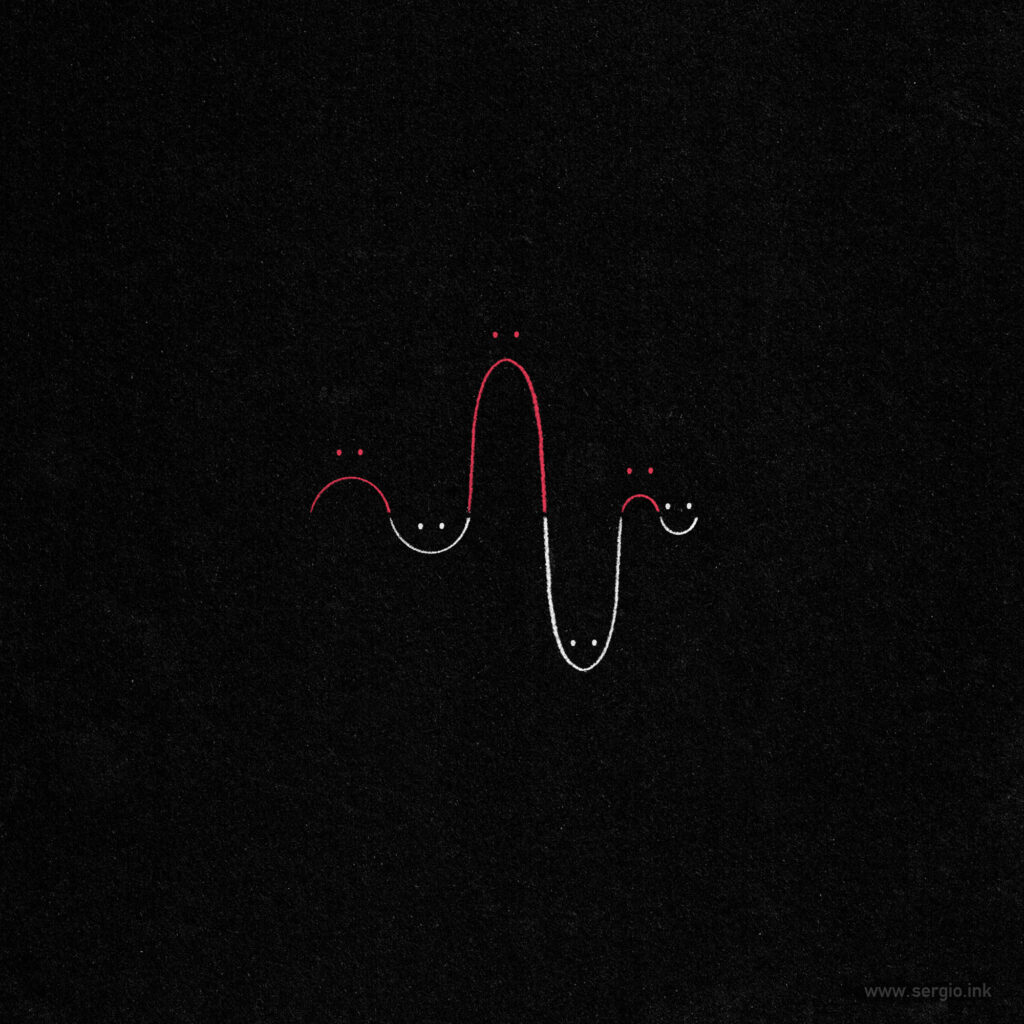
Yet the fascinating part is: the harder the challenge and the higher the frustration, the bigger the excitement when they solve it.
The same goes for any creative act—it’s full of peaks and valleys.
Let our kids be our mentors and relearn that frustration isn’t the enemy.
It’s the precondition for excitement.
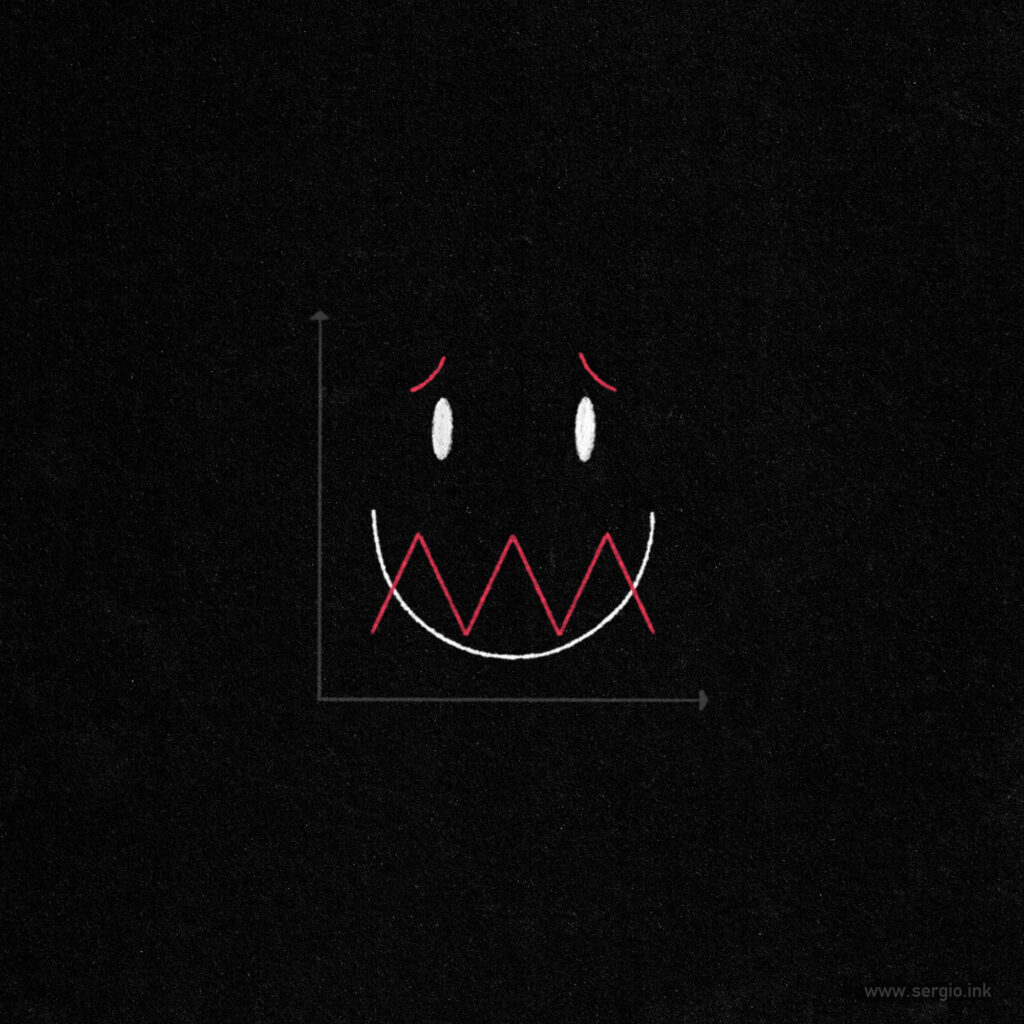
“Whatever scares you, go for it. […] Fear is just another form of excitement.”
—Derek Silver
(Book: Hell Yeah or No)
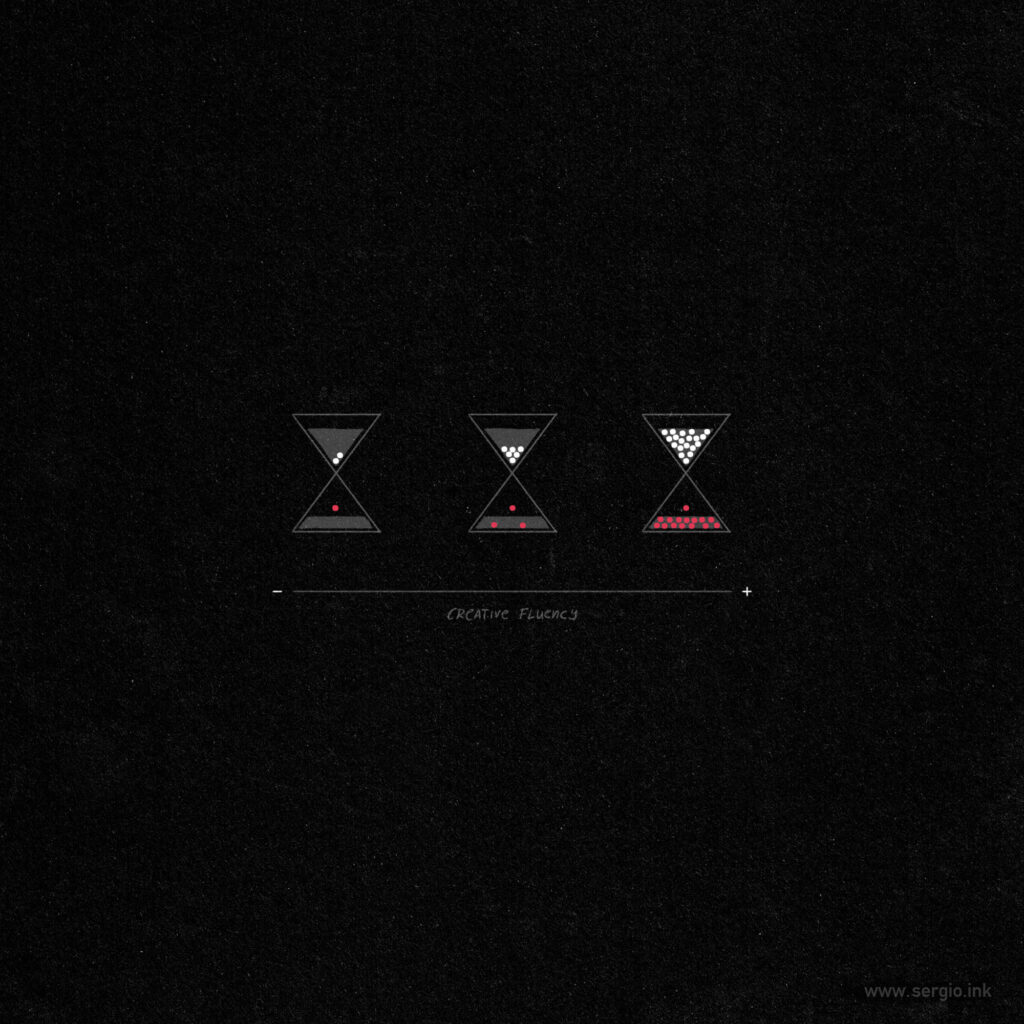
How many ideas or solutions can you develop within a given time frame?
The more we create—and train our minds to think creatively—the faster we become at generating ideas.
In 2016, I was commissioned for a conceptual illustration project and came up with four different ideas.
By 2022, that number had grown to over forty—within the same time frame.
Practice inevitably leads to creative fluency.
Creative fluency isn’t about finding the one brilliant idea.
It’s about generating dozens fast—without judgment or hesitation.
It’s not the skill to make a choice.
It’s the ability to create many choices.
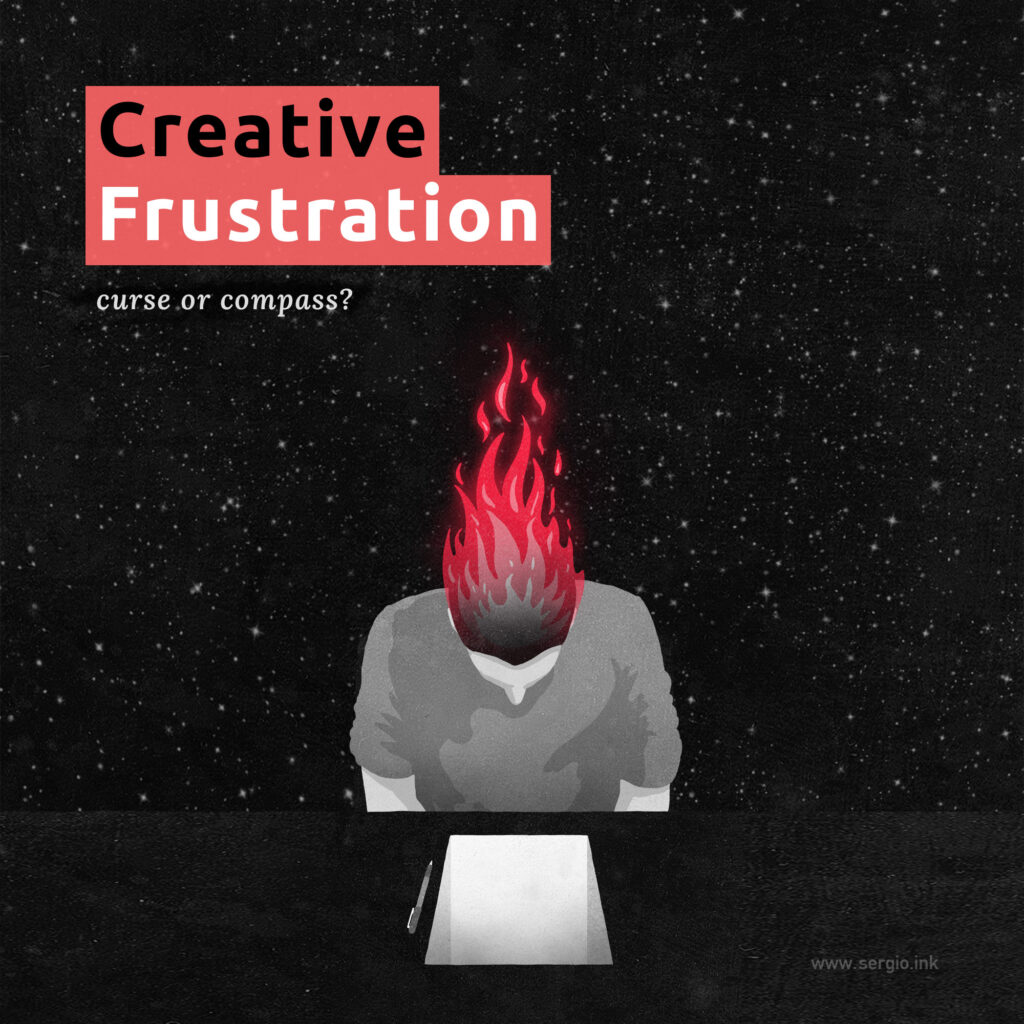
The joy of the creative act always comes with hot waves of frustration—even desperation.
If you have ever tried to paint like your favorite artist, play your favorite song on the guitar, or attempt to cook Mom’s perfect risotto, you know that boiling emotion in your chest when things don’t turn out as imagined.
Our brain is a master at visualizing ideal results.
Like when we book a hotel—we instantly picture the view, the light, the smell—and often, because of our irrational expectations, we’re disappointed upon arrival.
The same happens with creativity.
Our imagination is usually far ahead of our skills—and developing them takes patience and practice.
That’s the expectation gap—or, as radio producer Ira Glass called it, The Taste Gap—the space between our ability to envision something extraordinary and our current ability to manifest it.
So, just because we’ve read every book by our favorite author doesn’t mean we can write like them.
Continue reading “Creative Frustration”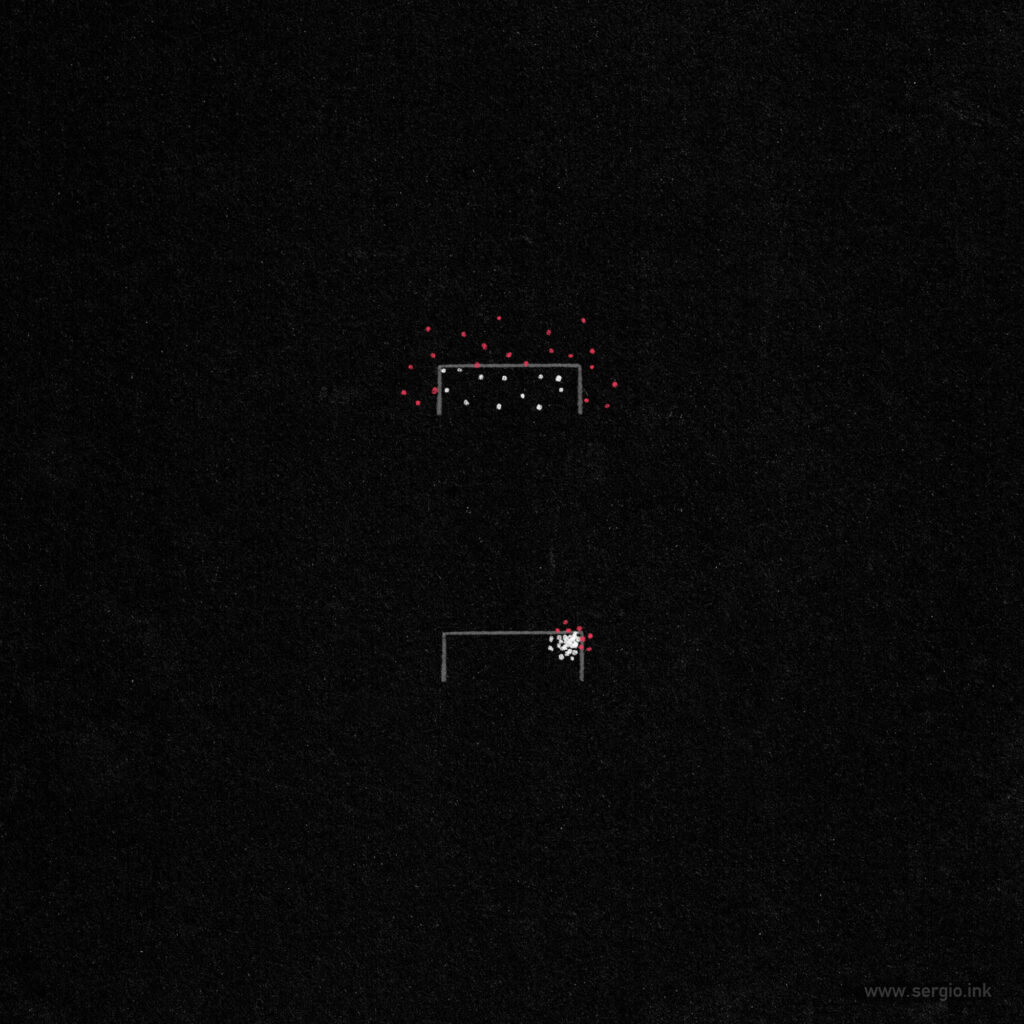
“I fear not the man who has practiced 10,000 kicks once, but I fear the man who has practiced one kick 10,000 times.”
—Bruce Lee

“Error is not simply a phase you have to suffer through. […] Error often creates a path that leads you out of your comfortable assumptions”
—Steven Johnson
(Book: Where Good Ideas Come From)
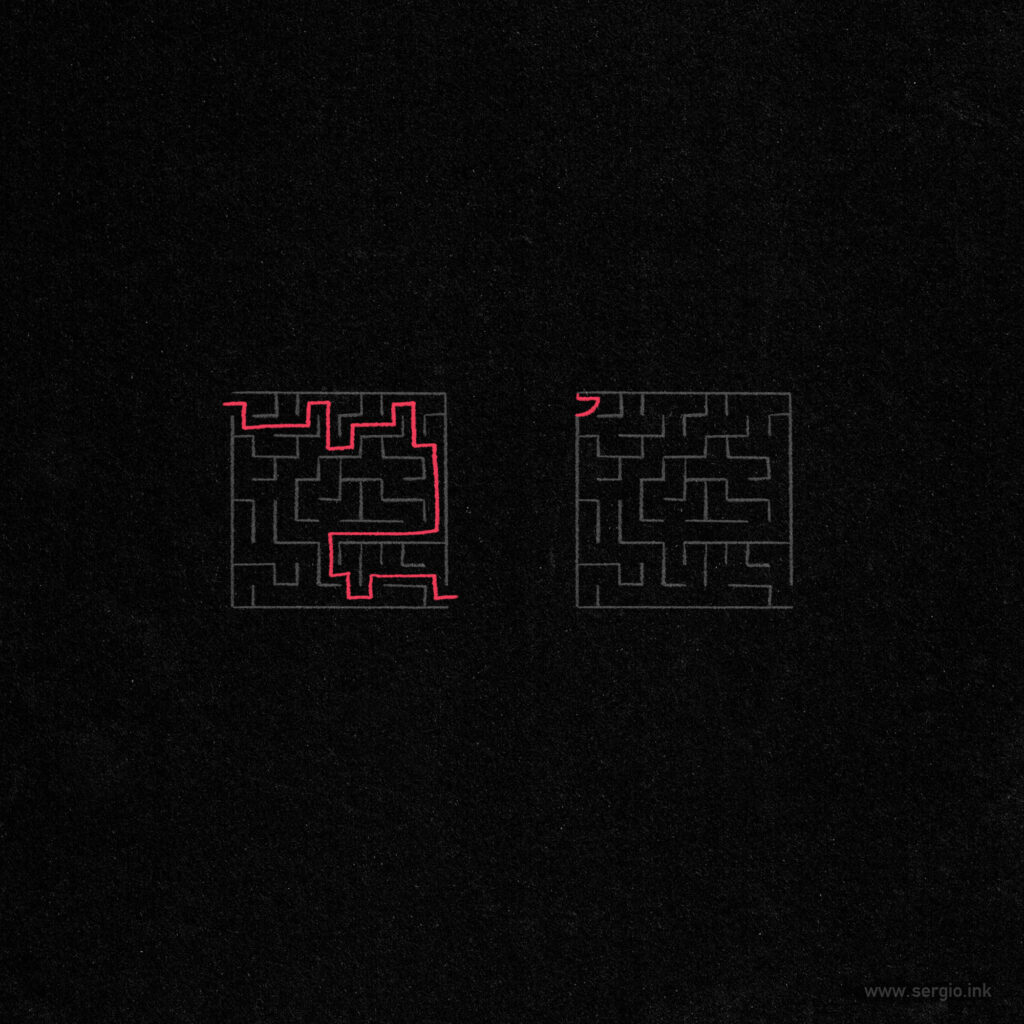
Creative education is not about showing the path—only the entrance.
While most school subjects ask us to memorise paths, creativity asks us to discover them.
That’s what makes creative fields so exciting, adventurous, and intimidating at the same time.
The results are intangible, the roads foggy, the destination out of sight.
So if everything about the creative act is so uncertain and vague—what’s the point?
Actually, the question already holds the answer.
The value lies in the very void we dare to step into.
Building the confidence to figure it out today, even if we don’t know how to get there tomorrow—that’s the superpower of highly creative minds.
It’s the odyssey that matters.
The space between the ? and the !
It’s always the journey that inspires. What makes the story of Columbus so legendary is the odyssey itself. Amerika already existed long before he set sail.
Embarking on a creative journey works the same way. Its fascination lies not in reaching the end, but in daring to begin.
If the outcome is uncertain, we can only embrace the process.
That’s what happens when we learn to foster our creativity—we learn to shift focus:
From goal to path.
From future to present.
It’s not about providing tutorials and presenting inspiring work.
It’s about sparking curiosity and showing entrances to one’s own creative world.
Not knowing what the outcome will be, yet acting anyway—that’s the power of curiosity and play.
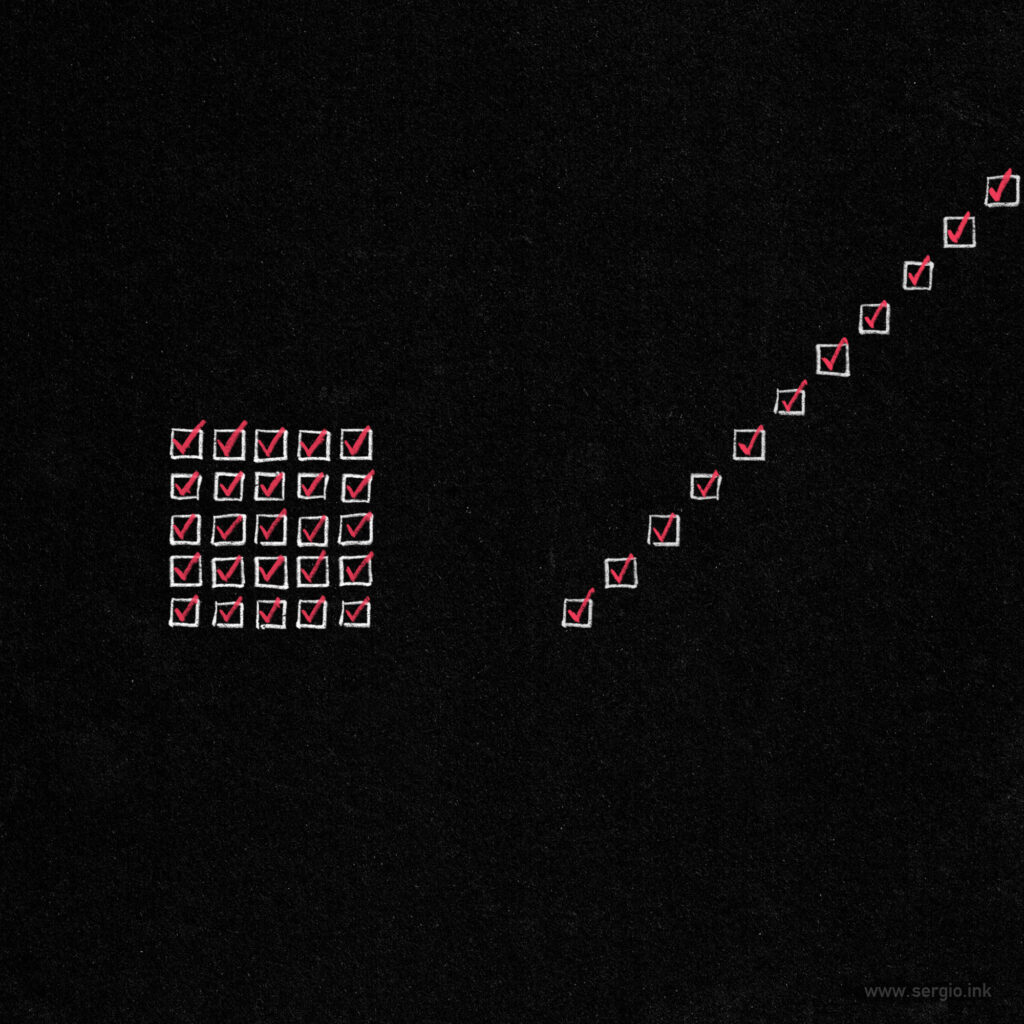
“If you show up every day and fill the box with something, you’re going to get all this stuff. Small efforts build into something big over time.”
—Austin Kleon
(Podcast: Art of the possible #9: Austin Kleon by Dave Gray)
You’ll find dozens of more inspiring advice and creative insights.
Watch the full podcast here.
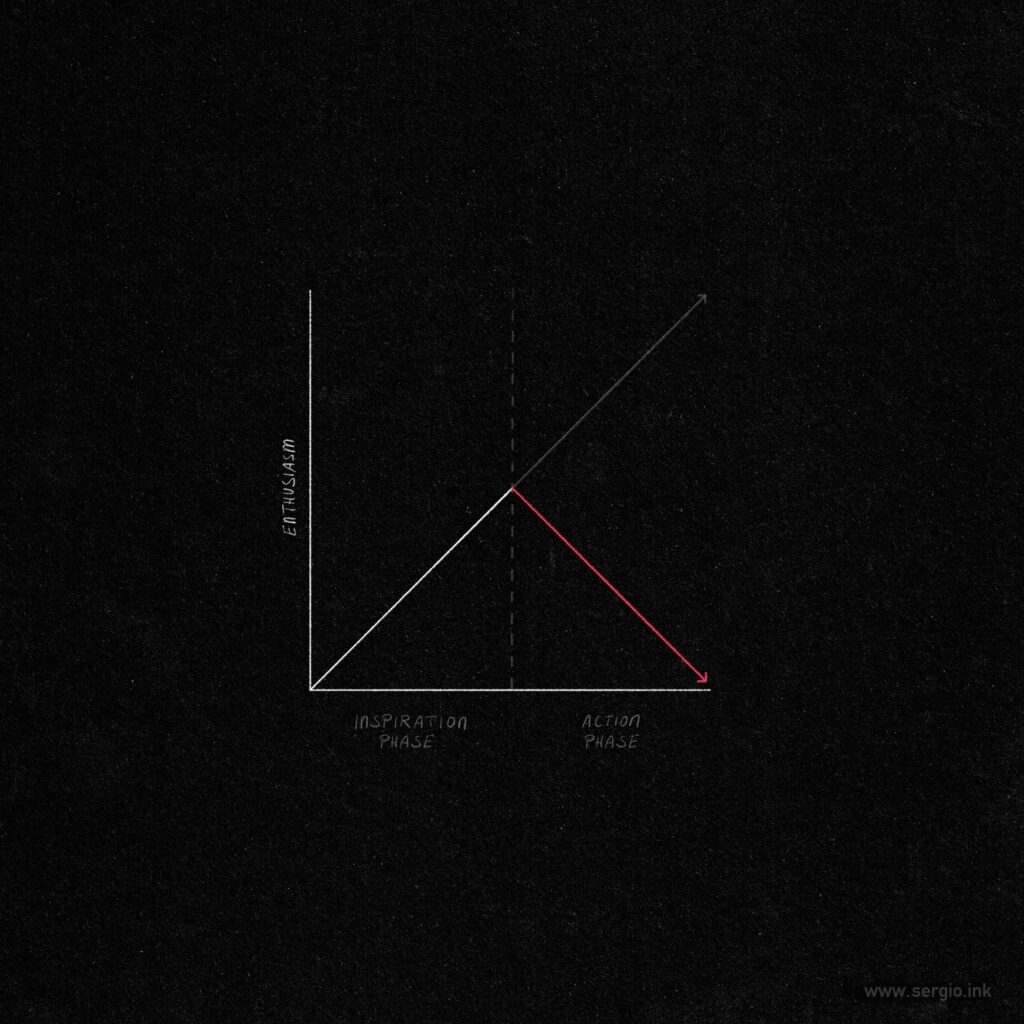
Do you know that feeling of excitement when a new idea strikes?
Maybe you stumbled upon an inspiring post, came up with the perfect plot for a novel, or finally found your dream business idea.
It’s something that immediately feels right—and you just can’t wait to dive in.
Except… you don’t.
You carry it around for days.
Weeks.
Sometimes years.
And suddenly, the idea that once filled you with energy starts to haunt you.
Even worse—it begins to dictate your inner peace, your confidence, your life.
Guilt creeps in. Bitterness follows…
I’ve been there. Dozens of times.
And it taught me one thing:
The good news is: we can easily avoid that downfall.
All we have to do is bring the idea out of our heads.
So here’s a challenge:
Take two minutes.
Throw that idea on paper, and see if it swims or if it drowns.
Maybe the initial spark revives—maybe not.
If it does, consider coming back to it tomorrow.
If not? Good. Let it go and clear space for the one that will.
Either way, these two minutes aren’t wasted.
In fact, they might just be the best investment of your life.
Dare it.
Screen off.
Mind on.
Now.
Thanks for your valuable Attention.
See you tomorrow.
Sergio
…
…
…
Hey, you still here?
No worries.
Maybe this approach can give you the last push.
Imagine this:
What if you didn’t find the idea?
What if the idea found you?
What if that flash of enthusiasm is the universe‘s way of nudging you?
Perhaps it’s trying to tell that the time for that idea has come.
The only question is:
Are you the one who will bring it to life?
You might be okay with disappointing yourself.
But do you really want to disappoint the universe?
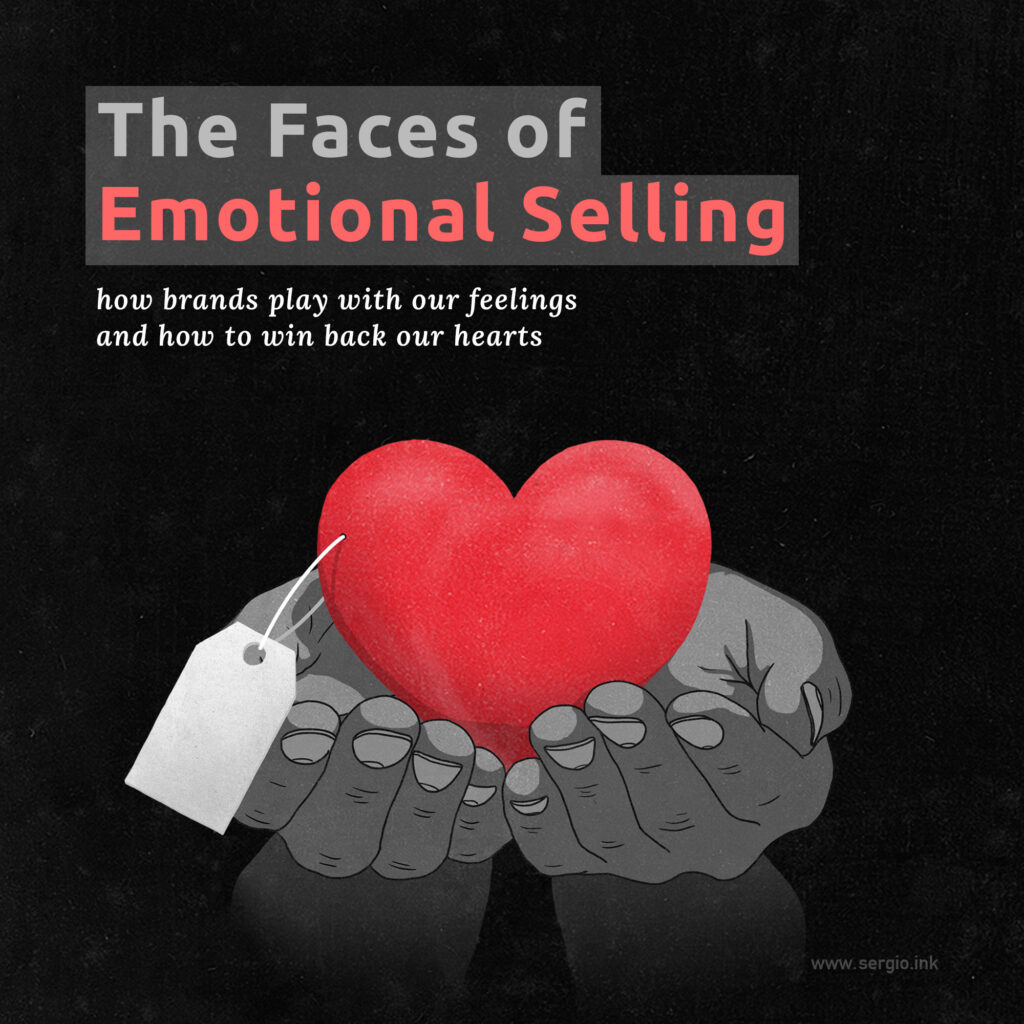
Do you suffer from Halitosis?
In the 1920s, Listerine faced a problem.
Originally invented in 1879 as a surgical antiseptic and later sold as a mouthwash, sales had stagnated at around $100,000 a year—respectable and established, but far from mass success.
That changed when Listerine launched one of the most influential ad campaigns in marketing history, which impacted not only sales but also society to this day.
“HALITOSIS makes you unpopular”
This is the headline of the ad that showed sad women and rejected men. The reason for their loneliness?
Halitosis—a fancy and medical-sounding word for bad breath.
The term has been used only in clinical contexts before, but the campaign turned it into a national anxiety.
The sales skyrocketed fortyfold within a few years, and the message was clear:
Use our product, or die alone.
Continue reading “The Faces of Emotional Selling”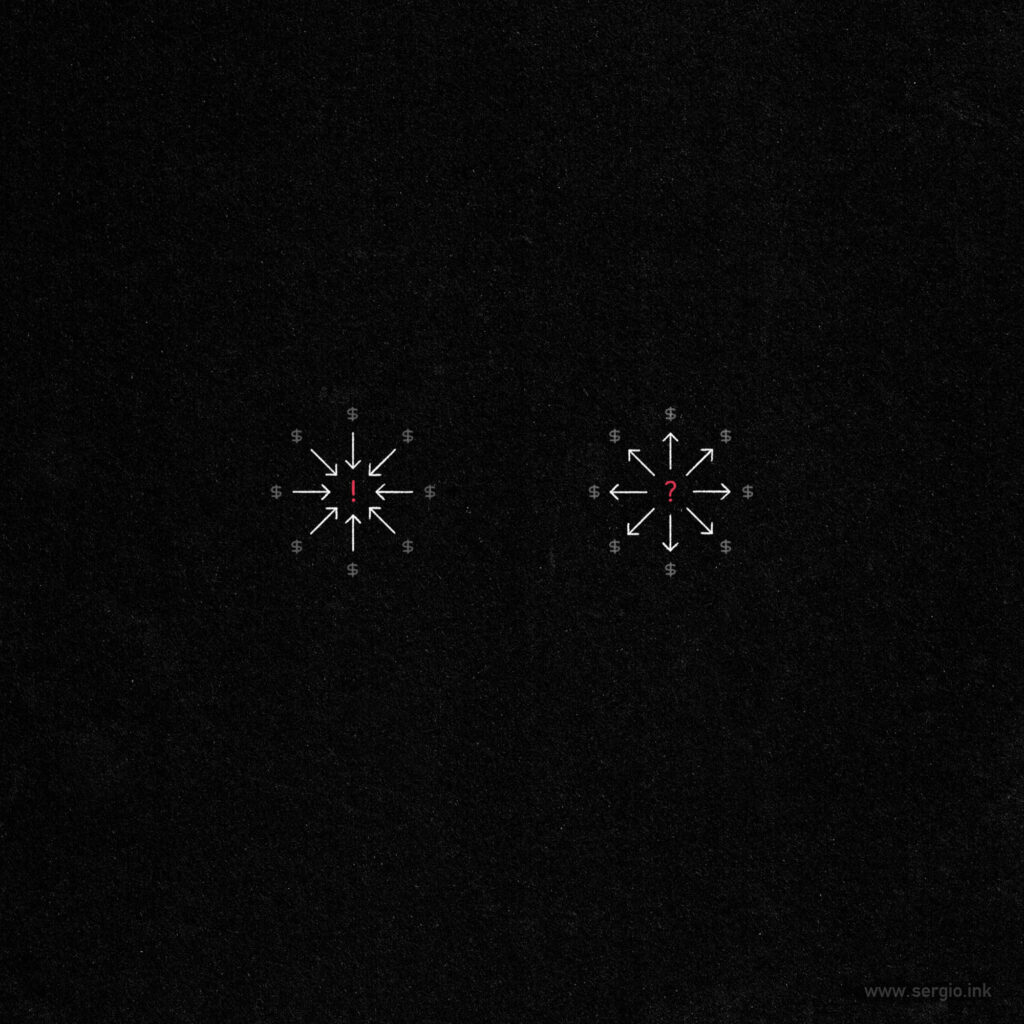
“Earn on what you know, spend on what you don’t.”
—Naval Ravikant
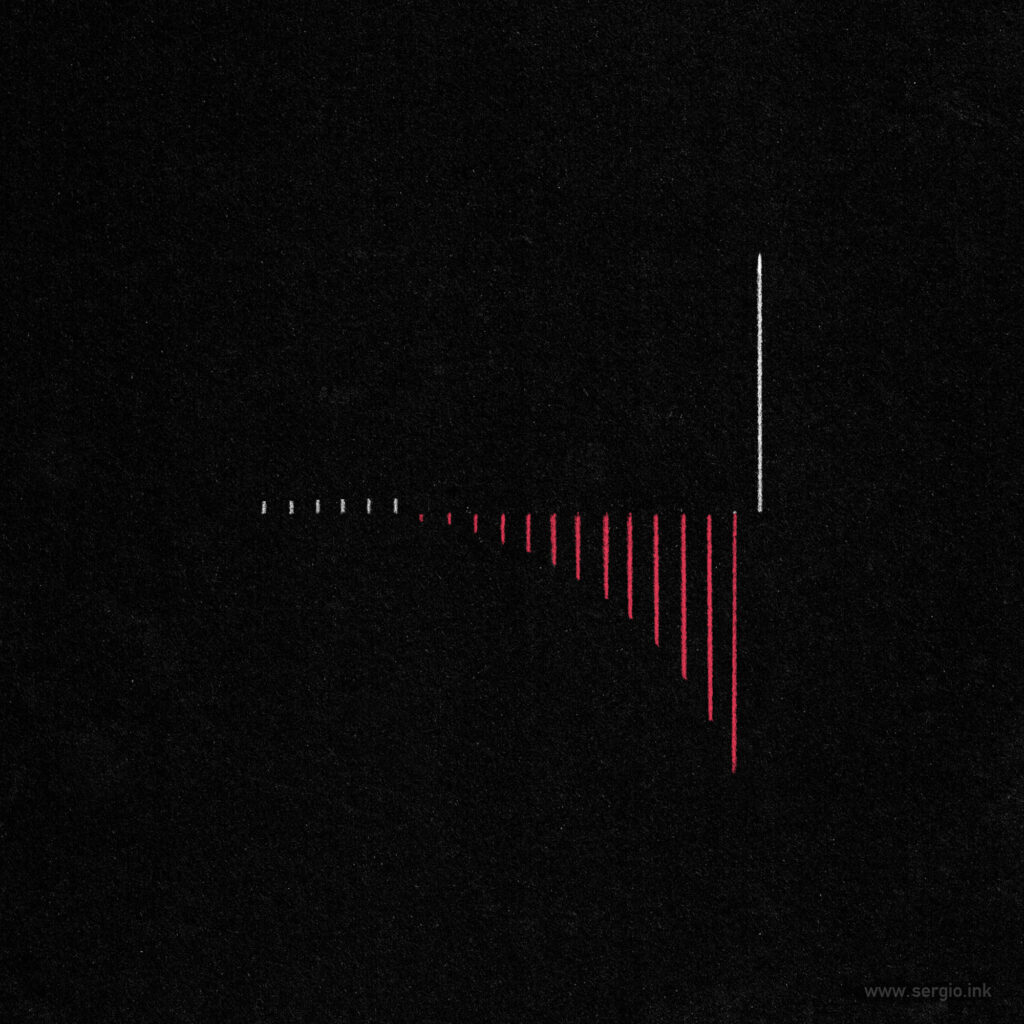
When you feel stuck, it might be time to disappear.
To recalibrate and grow in the absence of resonance.
When the noise gets too loud, seek solitude.
Tune into the inner signals.
No need to explain.
Your run-up may look like a step back to others—and that’s okay.
Return only when you’re ready.
Take your time to dig. To explore.
When the time comes, share your findings.
Surprise yourself first.
Then come back and surprise us.
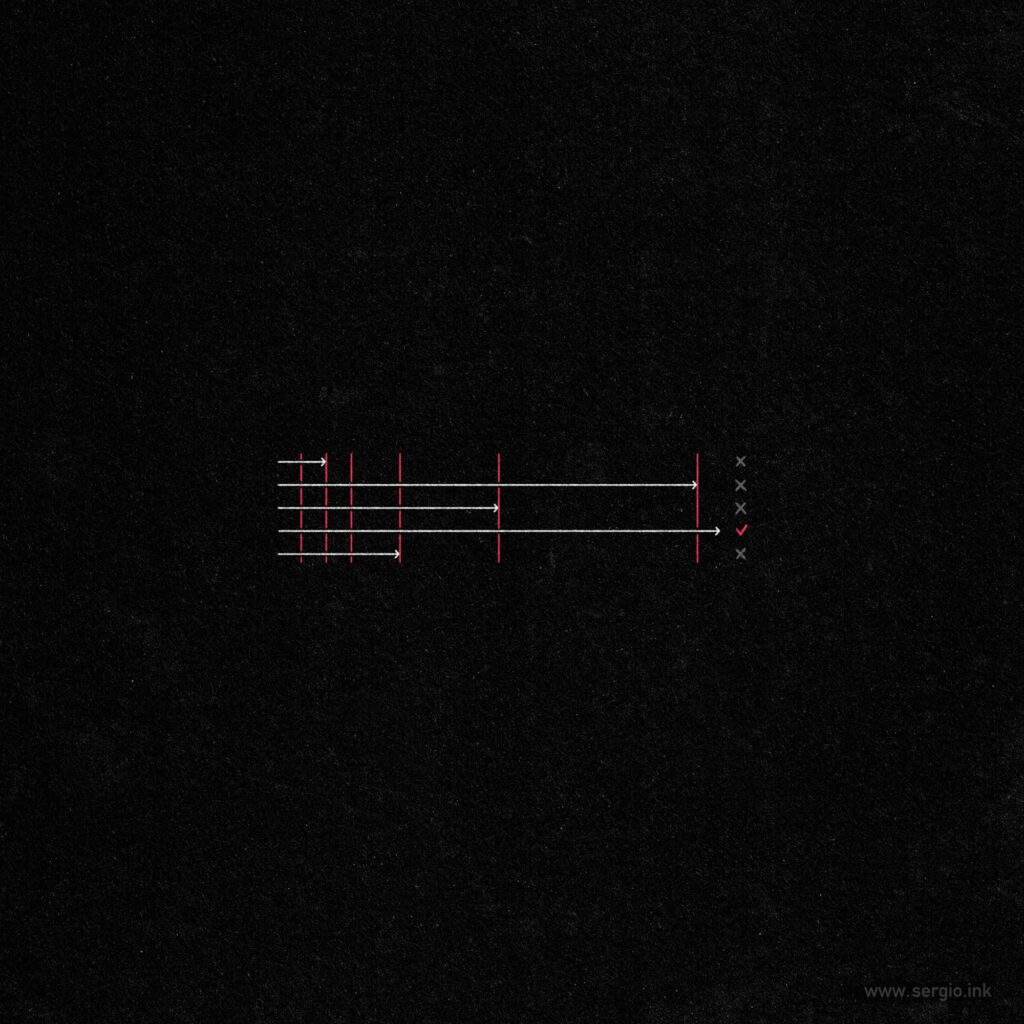
Determination:
[de- = “completely” + terminare = “to limit, end” (from terminus = “boundary, limit”)]
= “bringing something to an end”
Ideas end where determination stops.
Creativity isn’t about our ideas, the outcome, or any tangible result.
It’s about who we become along the way.
The joy of the creative act comes with a bill of commitment and initiative.
It asks us
to show up—even when inspiration fades and doubt creeps in.
To experiment in the unfamiliar.
To face our fears of failure.
To break through comfort zones and expectations.
To question our views and even our values.
To keep going—especially when distraction is tempting.
And push through resistance.
The result is like a trophy—just proof of our participation.
The real reward is meeting our most creative and courageous selves.
And the more we persist, the more we stand out.
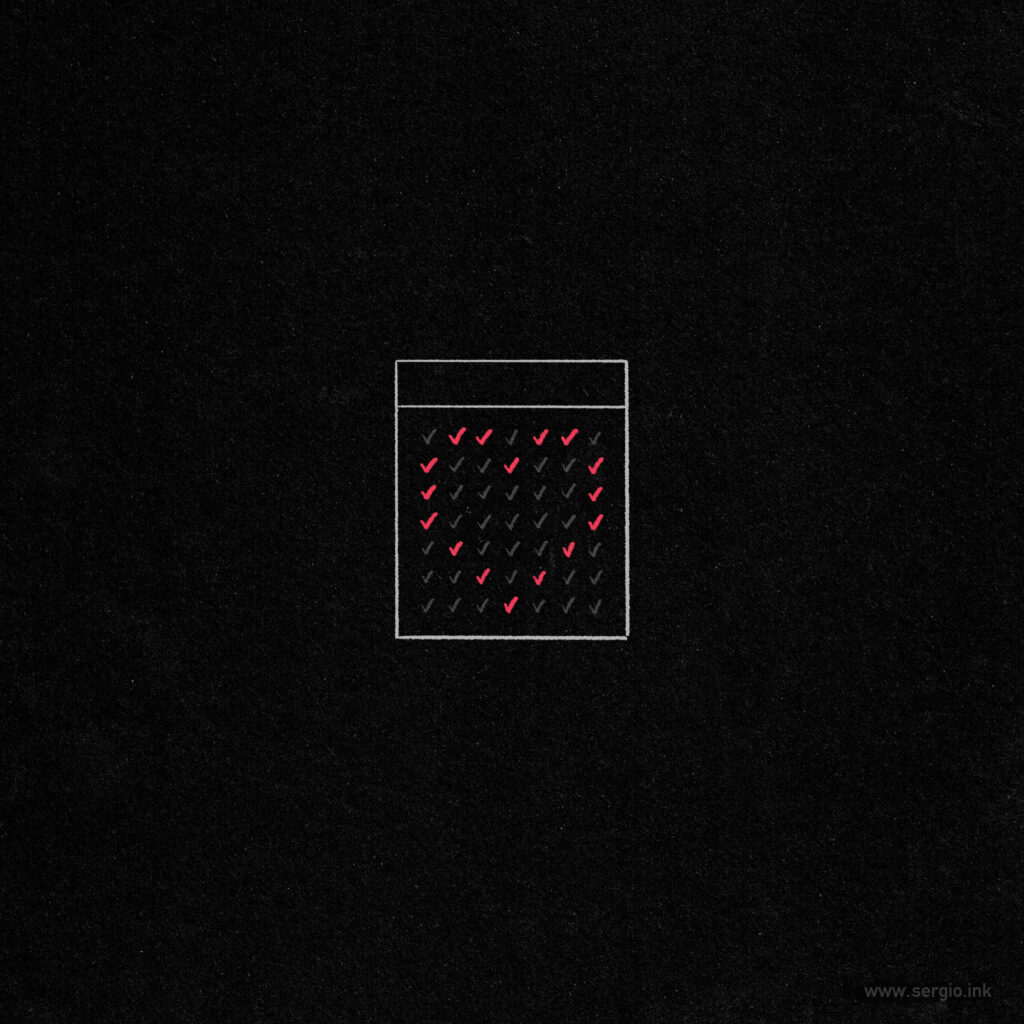
“Discipline is doing what you hate to do, but doing it like you love it.”
—Mike Tyson