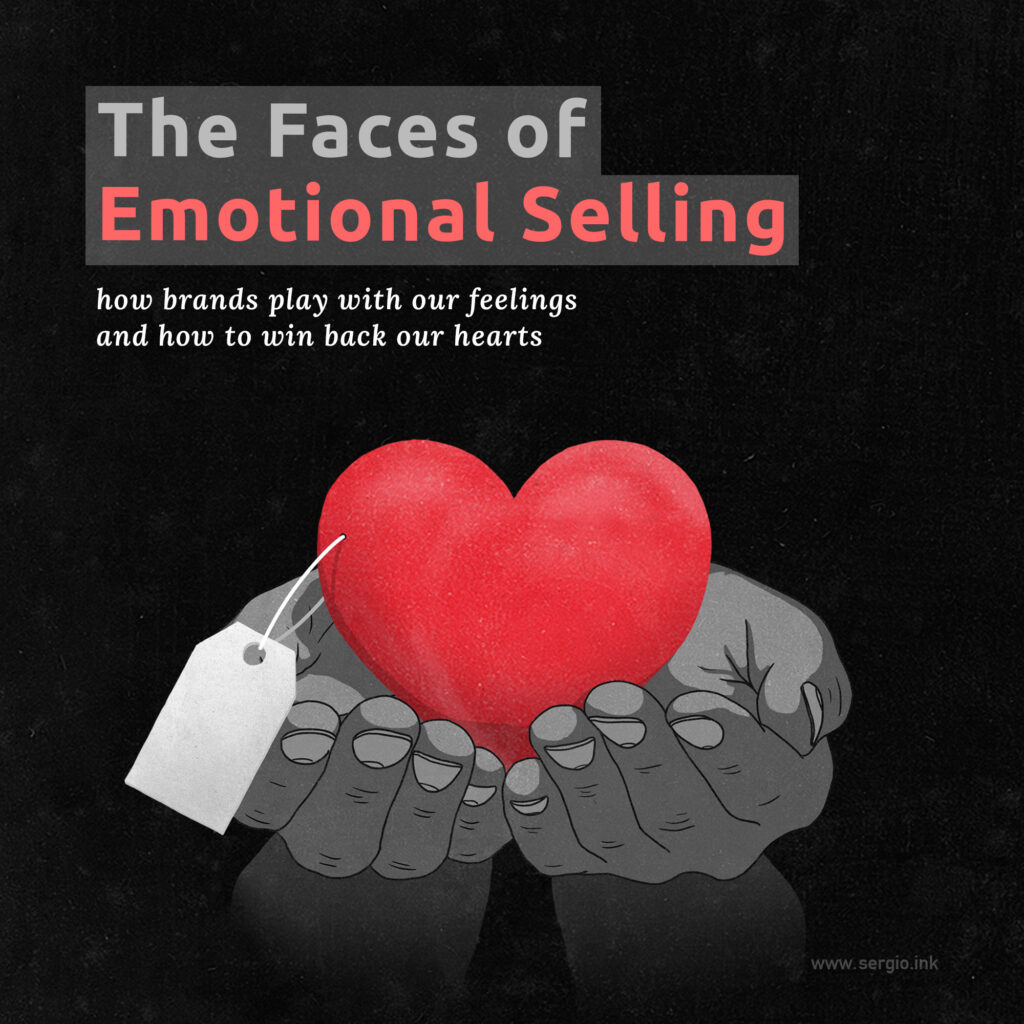
Originally invented in 1879 as a surgical antiseptic and later sold as a mouthwash, sales had stagnated at around $100,000 a year—respectable and established, but far from mass success.
That changed when Listerine launched one of the most influential ad campaigns in marketing history, which impacted not only sales but also society to this day.
“HALITOSIS makes you unpopular”
This is the headline of the ad that showed sad women and rejected men. The reason for their loneliness?
Halitosis—a fancy and medical-sounding word for bad breath.
The term has been used only in clinical contexts before, but the campaign turned it into a national anxiety.
The sales skyrocketed fortyfold within a few years, and the message was clear:
Walk middle—sooner or later, get squish just like grape.
Karate, same thing.
Either you karate do ‘yes,’ or karate do ‘no.’
You karate do ‘guess so’—squish like grape.”
30 years later
It took me three decades to truly understand this valuable message from one of my favorite childhood movies, Karate Kid (1984).
In this scene, Mr. Miyagi appeals to Daniel’s self-awareness by demanding a decision.
Not a lighthearted decision.
Not one made out of youthful naivety.
He demands a conscious and honest one.
The question is: Do or don’t.
Both decisions are valid.
He is not saying “don’t ever quit.”
He is saying, “Whatever your decision is—do it like you mean it.”
He warns that hesitation, indecision, or half-hearted effort is where danger lives.
The “middle of the road” is where unfinished projects, excuses, blaming, and shattered dreams lie.
Mr. Miyagi talks about 100% commitment—the kind that will inevitably lead to clarity and growth.
I can see why it took me so long to understand. It takes maturity.
And the appreciation of time that young people simply cannot have.
In their perception, time seems to be infinite.
Adults become conscious of their values and limitations.
That’s when we realize:
Every “yes” means saying “no” to something else—and vice versa.
The sooner we understand this trade, the sooner we learn to prioritize and dedicate our attention to what truly matters to us.
A Personal Story
At some point, I knew what I wanted to do—become a freelance illustrator. That was my dream, and I decided to turn it into my goal.
I was determined to achieve it.
Yet starting your own business comes with fears and doubts.
While working on my illustration portfolio, those insecurities led me to invest time in a plan B—just in case I didn’t succeed.
Plan B was to fall back on the things I used to do in the past—the kind that worked but didn’t fulfill me.
It slowed everything down.
The moment I stepped fully to one side of the road and declined all not-goal-related requests, everything changed—because now I no longer had to trade my time, focus, and determination.
I feel that I made that 100%, non-negotiable commitment Mr. Miyagi talks about.
And after a few months, I started receiving the kind of commissions I had dreamed of.
Starting any life-changing endeavor with commitment is a constant, decision-demanding adventure.
And that‘s the secret to daily excitement and fulfillment.
Arnold Schwarzenegger once said this in a speech, and it hit me hard in the stomach during a time of doubts and vagueness. I knew exactly what he meant.
His message is clear: If you have a goal—go all in. No safety net. No compromises.
Sometimes I’m hired for my service. Sometimes for my expertise.
Here’s the difference:
Service Provider
When we offer services, we don’t just get paid by our clients for our work and solutions to their problems.
We are mainly getting paid for reliability. In a competitive market, this is our most important selling point.
Providing a service demands a certain level of availability and flexibility—these are parts of reliability.
No masterpiece serves the client if it’s not delivered on time, and if the client feels that they cannot rely on us, we will be replaced sooner or later.
When I started offering my illustration service, I was aware that ad agencies work fast and on short notice and that magazines have strict deadlines. These are mostly non-negotiable conditions.
It’s my job to align my schedule around the client’s schedule. Not the other way around.
Accepting these conditions is not only mandatory. More than that, we have to find joy in meeting expectations. Making collaboration as smooth and pleasant as possible for all parties should be taken as a personal matter.
Expert
Things change as soon as we get hired as super-specific experts.
We’ll become these experts when we invest significantly more time and effort in a chosen subject than others. We gain a unique perspective through experiences and knowledge.
Experts are hardly outperformed by the competition. Someone who is easily replaceable is most likely not an expert.
When I am invited by companies and universities to give talks and share my experience about creativity or how to establish a freelance business, for instance, I am not the service provider anymore. Then, I’m the expert.
The expert is treated and compensated differently because the expert provides unique and precious knowledge in a specific field.
The expert is asked for availability because expertise will always be demanded and appreciated in any field.
Privacy & Cookies: This site uses cookies. By continuing to use this website, you agree to their use.
This website uses cookies to improve your experience while you navigate through the website. Out of these, the cookies that are categorized as necessary are stored on your browser as they are essential for the working of basic functionalities of the website. We also use third-party cookies that help us analyze and understand how you use this website. These cookies will be stored in your browser only with your consent. You also have the option to opt-out of these cookies. But opting out of some of these cookies may affect your browsing experience.
Necessary cookies are absolutely essential for the website to function properly. These cookies ensure basic functionalities and security features of the website, anonymously.
Cookie
Duration
Description
cookielawinfo-checkbox-analytics
11 months
This cookie is set by GDPR Cookie Consent plugin. The cookie is used to store the user consent for the cookies in the category "Analytics".
cookielawinfo-checkbox-functional
11 months
The cookie is set by GDPR cookie consent to record the user consent for the cookies in the category "Functional".
cookielawinfo-checkbox-necessary
11 months
This cookie is set by GDPR Cookie Consent plugin. The cookies is used to store the user consent for the cookies in the category "Necessary".
cookielawinfo-checkbox-others
11 months
This cookie is set by GDPR Cookie Consent plugin. The cookie is used to store the user consent for the cookies in the category "Other.
cookielawinfo-checkbox-performance
11 months
This cookie is set by GDPR Cookie Consent plugin. The cookie is used to store the user consent for the cookies in the category "Performance".
viewed_cookie_policy
11 months
The cookie is set by the GDPR Cookie Consent plugin and is used to store whether or not user has consented to the use of cookies. It does not store any personal data.
Functional cookies help to perform certain functionalities like sharing the content of the website on social media platforms, collect feedbacks, and other third-party features.
Performance cookies are used to understand and analyze the key performance indexes of the website which helps in delivering a better user experience for the visitors.
Analytical cookies are used to understand how visitors interact with the website. These cookies help provide information on metrics the number of visitors, bounce rate, traffic source, etc.
Advertisement cookies are used to provide visitors with relevant ads and marketing campaigns. These cookies track visitors across websites and collect information to provide customized ads.